How Case-by-Case Criminal Screening Works
What human vs automated review looks at, why outcomes vary by property, what you can influence, and how a locator front-loads approval.

In the Texas leasing market, automated screening tools frequently issue a hard denial before a leasing agent ever sees your application.
We know exactly how apartments screen criminal records in Austin because our team at Austin Second Chance Apartments works with these cases daily.
The path to approval almost always requires case by case apartment screening.
This individualized assessment apartment review bypasses blanket auto-deny policies by requiring a human to evaluate your file.
We will break down exactly what property managers evaluate, which factors carry the most weight, and the specific documents you need. Let’s look at the data and explore practical ways to respond to a background hit.
How apartments screen criminal records in Austin: What case-by-case screening is
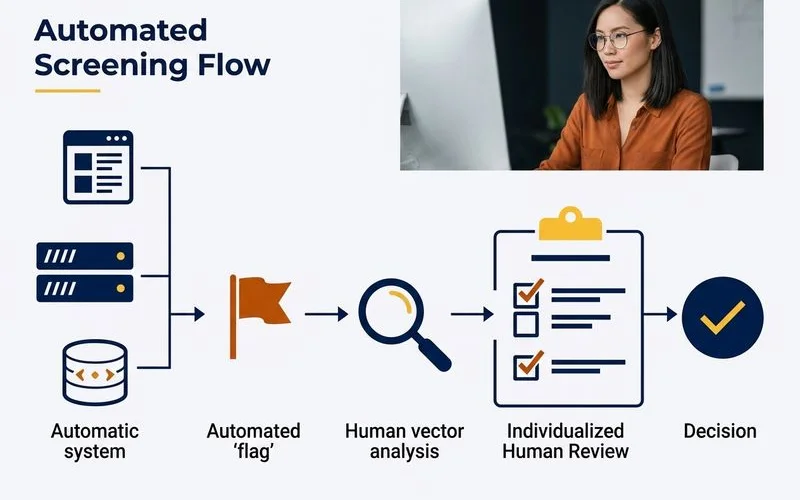
”Case-by-case” or individualized assessment means the property’s screening process includes a human review. Instead of letting algorithms like TransUnion’s ResidentScore 3.0 or Yardi systems dictate a strict yes or no, a staff member evaluates your full application in context.
The typical trigger sequence looks like this:
- Background check runs against the property’s lookback window.
- A hit appears because your record is inside the timeframe.
- Instead of an automatic denial, the screening service flags the application.
- A property staff member or compliance specialist looks at the full application.
- A decision is issued based on the complete financial and personal picture.
Not every apartment community offers this option. Many properties enforce strict blanket policies that automatically deny any hit within the lookback period. Your primary goal is to target the specific communities that actively perform manual reviews.
Why some properties do it and others don’t
Why do some landlords take the time to review files manually? Several core drivers influence this decision at the corporate and local levels.
- Recent Federal Policy Shifts: A major factor is changing federal guidance on housing access. In late 2025, HUD issued an update rescinding previous memos, giving landlords broad discretion to screen for community safety. Because property owners now have more leeway to enforce strict policies, finding the independent operators who voluntarily choose individualized review is more critical than ever.
- Property Management Philosophy: Independent landlords and smaller-portfolio properties are frequently more willing to conduct individualized reviews. These owners hold the authority to make case-specific decisions without needing corporate approval.
- Market Pressure and Competition: Competitive sub-markets in Austin often push properties to adopt flexible screening. When apartment supply increases, landlords widen their applicant pool to maintain high occupancy rates.
- Legal Counsel and Risk Mitigation: Some property management companies shift to case by case apartment screening after legal consultations. A blanket ban carries the risk of disparate impact claims under the Fair Housing Act, prompting smart operators to look at the whole applicant.
Strict institutional properties, especially large nationwide portfolios with rigid rules, rarely deviate from automated denials.
What the human reviewer actually considers
When your application receives a flag for human review, the leasing manager evaluates specific risk factors. The reviewer weighs the details of your past against the strength of your current financial profile.
Key Evaluation Factors
- Nature of the offense: Non-violent and lower-severity offenses consistently fare better.
- Age of the offense: Older records cause fewer issues, while recent convictions require extensive documentation.
- Disposition details: Completed probation or deferred adjudication reads significantly better than a fresh conviction.
- Time elapsed: Reviewers look favorably on long periods of clean history since release or completion.
- Pattern of behavior: A single, isolated offense is much easier to approve than a repeated pattern.
Financial and Contextual Offsets
- Income strength: Showing strong income at three times the rent or higher actively offsets perceived risk.
- Documentation provided: Letters of rehabilitation, official county disposition records, and references add critical context.
- Other application factors: Excellent credit scores and stable rental history play a major role in the final call.
The reviewer makes a calculated judgment call across all these points. Strong income paired with excellent documentation frequently outweighs a recent record. A weak application featuring an old record sometimes underperforms a strong application carrying a recent mark.
What you can directly influence
Taking control of your application means focusing on the elements you can actively change. Five specific actions can shift a manual review decision in your favor.
1. Maximize Your Income Strength
Income is the single biggest factor you control. Standard approval requires three times the rent, but hitting 3.5 or four times the rent makes your application dominant. Lowering your target rental price to push your income ratio higher dramatically increases your approval odds.
2. Draft a Factual Rehabilitation Letter
A brief, factual letter gives the context that automated screening algorithms ignore. You need to include specific dates, current employment details, and a clear explanation of what has changed. Keep the tone professional and avoid asking for sympathy.
3. Provide Clear Court Documentation
Always show the exact outcome of your case using official documents. Presenting clean paperwork for a conviction, deferred adjudication, or probation completion often shifts a borderline case. Official documents remove the ambiguity of a bare screening hit.
4. Secure Professional Employment References
A current supervisor letter printed on official company letterhead vouches for your stability. This proves to the reviewer that you hold steady employment and have the backing of local professionals.
5. Pre-disclose to the Property Manager
Calling the leasing office before applying sets a transparent tone. Giving the manager the offense type and age upfront ensures the reviewer already has context when your file crosses their desk. Proactive communication frequently makes the application move faster.
What you can’t directly influence
Even with perfect preparation, certain elements remain out of your hands. Understanding these limitations prevents wasted time and application fees.
- The property’s blanket policy: Some corporate policies are absolute and allow no manual review at all.
- The reviewer’s individual judgment: Different leasing managers will arrive at different conclusions based on their personal risk tolerance.
- Local market conditions: During periods of tight housing inventory in Austin, properties tighten their screening criteria.
- Screening service data quality: Background check companies sometimes pull inaccurate public records that flag an application unfairly.
How locators front-load approval
Our team focuses entirely on renters carrying records inside the standard lookback window. Blind applications usually result in expensive rejections and prolonged frustration. We developed a specific process to bypass the automated denial systems.
The strategy involves four critical steps:
- Identify true case-by-case communities. Pinpointing the exact properties that conduct individualized reviews for your specific offense type saves you time and application fees.
- Pre-call flexible properties. We speak directly with leasing managers to frame your situation before you ever submit an application.
- Coach you on required documentation. Gathering the right court records and structuring your references correctly is essential for a fast approval.
- Filter the curated list. We narrow your options to the communities most likely to approve your specific background.
This targeted method completely changes your odds. The approval rate for records under seven years goes from very low to exceptionally high when you apply strategically.
What to expect on timing
Case-by-case decisions generally take between three and seven business days at most Austin communities. Standard automated approvals happen in minutes, but human review requires leasing staff to pause their daily tasks to evaluate your file.
The completeness of your documentation directly impacts this timeline.
| Application Status | Average Decision Time (2026) |
|---|---|
| Standard Automated Approval | Minutes to 24 hours |
| Complete Case-by-Case File | 1 to 3 business days |
| Incomplete File (Missing Docs) | 7 to 10 business days |
A reviewer holding a complete package can often issue a decision in a single day. A manager forced to request follow-up documents or wait on reference checks will frequently take up to 10 business days to respond.
Understanding how apartments screen criminal records in Austin gives you the power to take control of your housing search.
For complete renter-side strategy, see renting with a non-violent felony over (and under) 7 years.
Ready for a curated list of case-by-case communities matched to your record? Request your free list →
Frequently asked questions
What is case-by-case screening?
Individualized review of your record's nature, age, and context — instead of an automated yes/no based on a blanket policy. The decision considers the whole application, not just the record.
What can I influence in the decision?
Your income strength, documentation, references, the rehabilitation letter, and how your situation is framed to the reviewer. Each shifts borderline decisions.
How does a locator improve my odds?
By targeting communities that do individualized review and pre-framing your situation so the case-by-case reviewer has context before they pull your file.
Ready for a curated background list?
Tell us your situation. We'll send a list of Austin apartments that will approve you — in 24-48 hours, free, no upfront fees.
Get Your Free List